Thursday, April 30, 2015

Buying Fabric and Fabric Prep

It's time to go fabric shopping! I love this part.

How Much Fabric:
First of all, before you leave the house, you have to figure out how much fabric you need. Again, I always overestimate.

I found this photo on Pinterest, and I'm modeling my dress on it.
It's not quite floor length, and since it's for Pennsic, that's what I want. I'll still use measurements and cut it as if it's floor length just to be safe. Then I'll hem it up to where I want it.

The quick and dirty way to estimate fabric for a dress like this is to take your shoulder to floor measurement, double it, and then add extra. How much extra? I don't know. You'll need some, maybe ¼ yard, to account for the fabric shrinking when you wash it. If you're adding separate gores to the skirt, you'll probably want at least one additional yard. If you're doing a neck facing like I am, you'll want another ¼ to ½ yard. If you're nervous, you'll want to add another ½ yard. 

If you're really nervous, you can sketch out how you're going to piece the fabric, decide how you're going to lay it out, and get an exact amount. I usually don't bother doing that unless I'm making something I've never made before or something that has a lot of pieces.

Here's the quick math I did to figure out how much fabric to buy for this dress.
Shoulder to floor = 62”
62” x 2 = 124”
124”/36” = 3.444 yards
I round up to 3.5 yards and add 1 yard because of shrinkage and because I'm going to do a neck facing. I think I'll have enough for the gores on the side of the tunic when I cut it out. If not, I might have to buy more fabric later and the color of the dye lot may not match exactly. I'm willing to take that risk.

But wait! Fabric comes in different widths, usually between 36” and 60”, with 44” being the most common. The linen I like is 51” wide. If you're using something narrower, you might need more fabric. If any part of your finished garment is going to be bigger around than 2 times your fabric width (subtracting a couple inches to account for seams), you'll need more fabric. For the T-tunic, though, that shouldn't be the case unless you get fabric narrower than 40” wide, which isn't very common.

I bought 4 ½ yards of 51” wide fabric.

Fabric Selection:
When you're picking out your fabric, if you aren't getting sheets from a thrift store, check out the label on the bolt. Aside from the price, it will tell you the width of the fabric, washing instructions, and the fiber content. Keep in mind that almost all fabric shrinks when you wash it and that cotton shrinks more than most other fibers you'll see. I would stay away from fabrics that are more than 50% polyester or rayon since they don't breathe as well and get uncomfortable.

Speaking of comfort, check out the “hand” of the fabric. That just means to feel it, get a sense of the weight and the texture. You may have to unspool the fabric from the bolt a bit to do this. When you do that, you also want to find out how see-through the fabric is. Put your hand under one layer of fabric to see how sheer it is and decide what you're comfortable with. You might have to hold the fabric up to the light to get a real sense of this.
Take the fabric to the counter and get it cut.

Rant:
At a good fabric store, they will usually tear the fabric rather than cutting it. Not all fabrics will tear well along the grain, but cotton and cotton blends do, as do most linens. Tearing it ensures that your piece is on the grain and you're getting the full length that you're paying for. JoAnn's won't let their employees tear the fabric and it upsets me. I actually mentioned this to an employee the other day, and she said, “But tearing causes it to pull and pucker.” I wasn't going to argue with her, but that's stupid for a couple of reasons. One, it usually doesn't pucker or pull beyond a half-inch. Meanwhile, I can usually count on losing at least one whole inch due to the fabric not being cut on the grain. In fact, I usually lose two or three inches. Two, you should always wash and iron your fabric before you start cutting and sewing. If you do that, the puckers go away. So, to summarize my rant, tearing good, cutting bad, but most of us don't have much choice when it comes to where to buy fabric.

Fabric Prep:
Now that you have your fabric at home, it's time for my least favorite part: washing and ironing the fabric. Always washing your fabric before you make your garb. You don't want it shrinking after you've put all that work into it, and you definitely want to be able to wash this stuff.

I wash the fabric in hot or warm water with a normal spin cycle and dry it on hot or warm. If you got a strange fabric blend or wool, you'll want to follow whatever care instructions that bolt of fabric had on it. Once the garb is made, I'll only wash it in cool or warm water and do a low dryer cycle to ensure that no more shrinkage occurs. While your fabric is still a tiny bit damp, iron it. The dampness makes it easier to get the wrinkles out. You can always spritz it with a little water if it dries before you iron it.

Now you're ready to start cutting and sewing!


Taking Measurements for Medieval Garb

This is not (entirely) the way to take measurements for making modern clothing and certainly not the way to take measurements if you're doing serious pattern drafting. This is the quick, dirty, and easy way to do it so that you don't accidentally make things too small or buy too little fabric for yourself.

Ready? Let's get going!

Thursday, January 2, 2014

End of Year Wrap-Up, Goals for 2014

Happy New Year, everybody!

Last year was pretty good, overall, but I am sure this one will be even more exciting, what with the wedding and the possibly house-buying.

I did reach my goal for last year of reading 26 books, but I didn't surpass it even though I had extra time at the end. For 2014, I'm setting my goal at 30 books. It will be trickier, to be sure, but I could easily spend less time watching TV.

My other goal for next year is to post more on here. I made 16 posts last year. I know I can do better than that, especially if I spend more time talking about the books I'm reading and the crafts and cooking I'm doing.

As far as everything I read last year, here are some of the highlights and lowlights:

Books read: 26
Fiction: 24
Non-fiction: 2
Graphic Novels: 3 (both also included under Fiction)
Approximate number of pages read (according to Goodreads): 10,000

Books with Male Protagonists: 12
Books with Female Protagonists: 7
Books with Both/Neither: 7

Favorite Book of the Year: Well, really, there were several, but at the very top, I think I'd place
"The Night Circus" by Erin Morgenstern, followed by "The Ocean at the End of the Lane" by Neil Gaiman, "Life After Life" by Kate Atkinson, and "The Magicians" by Lev Grossman.

Least Favorite Book: "The Sword in the Stone" by T.H. White. Sorry. I know a lot of people love it, but I really didn't.

And since I don't want to end this on a down note, here are some of the books I plan to read in the next 12 months:
"Cleopatra" by Stacy Schiff. In truth, I've already started this one.
"The Passage" by Justin Cronin. I started this one when it first came out (and may have read about half of it on a Nook while working,) but I never finished it. I'll have to start from the beginning again.
"A Distant Mirror" by Barbara Tuchman. Since I won't be able to go to Pennsic this year, I'll read this book about the 14th century instead.
"Flight Behavior" by Barbara Kingsolver. My mother and my sister both got a copy for Christmas. Okay, I may have been the one to give my mom the copy. Anyway, we all love Kingsolver, and I'll be able to borrow a copy.
And, of course, many, many more, but if I plan my whole reading list out ahead of time, I'm guaranteed to not read any of the books on the list and choose entirely different things to read.

Saturday, November 9, 2013

"The Ocean at the End of the Lane"

I just finished "The Ocean at the End of the Lane" by Neil Gaiman. It was book number 25 of my goal of 26 to read this calendar year. I'm so close to my goal! At this point, I'm hoping to actually reach 27 or 28 books for the year, but we'll see. I still haven't chosen what I'm going to read for book 26, and since I have so much time, I think I'm going to choose a longer book from my list.

Anyway, back to the important part: my review of this delightful novel.
I've read a fair amount of Mr. Gaiman's prose but not nearly enough. Like everything he's written that I have read, the story lies in the in-between of folk tales and reality and the suggest to the reader the delight of the unknown mundane. "The Ocean at the End of the Lane," without giving too much away, reminds us our memories are necessarily filtered through our experiences and our present worldview. How do we know that our memories are true? When we walk a familiar path, do we know how many times we've walked it before?
It's impossible (isn't it?) to adequately describe the books that truly consume us as we consume them. Suffice it to say that I loved this one, and it's something I know I'll read again and again. If you haven't read it, you should immediately reserve it from the library (as I did) or purchase a copy or borrow it from a friend, make yourself some tea or coffee or cocoa, curl up in bed or in a large, comfortable chair, let a cat or two curl up with you, and begin to read. Mr. Gaiman, in the way of Maurice Sendak, charges us to remember the dangers and horrors of childhood along with the magic. While it is just as scary and dangerous as our own world, I want to live in Mr. Gaiman's worlds.


Good News/Bad News: Tim Horton's

Good news: A Tim Horton's just opened up near Pittsburgh!

Bad news: It's in a gas station.
More Bad news: It's an hour from where I live.
Good news: It's only 15 minutes from where I work!
Bad news: I ate about 10 Timbits in one day.
Good news: I was able to eat Timbits!

Wednesday, September 18, 2013

Stop Trying to Explain My Generation Using Disparaging Stereotypes

I read this article on the Huffington Post.
This is not the worst article I've read on Generation Y (born between the late 1970's and the early 1990's,) but, in general, the journalists that try to define my generation or 'understand' why we're all such 'entitled,' 'self-centered,' 'unhappy,' 'delusional' people enrage me. Yes, we were brought up to expect that we could achieve greatness. So, what? The real issue is that as we enter our mid-twenties, we're all confronting reality as previous generations have done when they enter adulthood. It just so happens that we're entering adulthood at a later age than previous generations because so many of us are going to college. And aside from the people I know with actual clinical depression, very, very few people I know in my generation are unhappy.

These articles frequently forget that the most defining characteristic of our generation is adaptability. I was born in '85. My family had a microwave, but our TV had no remote control. This wasn't uncommon. I remember a time when no one knew what the internet was. The first computer I got my hands on only used DOS prompt commands. The technology I use on an hourly basis, the very tools I use constantly at work, the way I receive my entertainment (aside from books) was unthinkable to me when I was young. I'd guess that most people my age would say the same thing.

And we've embraced these things. We aren't scared of change. We know that the way we work and function in 10 years -- heck, even in five years, will be radically different from the way we live now, and we love it! We're trying to create those new tools, those unthinkable resources, those gadgets that we won't know how we lived without.

And we understand that we can't control the world. We understand tragedy and disappointment and fear. We remember the crash of the Exxon Valdez. We remember Kosovo. We remember September 11, 2001. We've lost friends and family members in the Gulf Wars. We remember the dot com bust and the housing bust and we've spent a good chunk of our lives in the Great Recession. We lived through Katrina and Sandy. And yet most of us are still optimistic. Is that delusional? Is that foolhardy? No. It is the only way to live. We know that things are beyond our control, but we also know that the smallest things we do can make a difference. We pay more money to drive hybrid cars in an effort to wean ourselves off of oil. We've pushed for renewable resources. We christened the 'Go Green' movement. We're standing up for ourselves and our friends and letting the world know that homophobia is just as immoral as sexism and racism. We also remember the end of the Cold War, the dismantling of the Berlin Wall, seeing the "Pale Blue Dot" photograph sent back from Voyager. We were breathless as Curiosity landed on Mars. We've seen AIDS go from a death sentence to a manageable, while still devastating, disease. We know we, standing on the shoulders of past generations, will find a cure. We know we will reach farther because that's what humanity does, generation after generation.

We know it's not easy. We know we'll have to work hard. We expect to work hard. And most of us don't expect to get wealthy. We know that Social Security won't be around for us when we retire. We know that our kids will have to go to college in order to earn a living wage and that college costs keep rising. We're planning on paying off our own student debts while financing our children's education. We accept that. We know that times are tough and we're buckling down.

The Greatest Generation grew up in similar circumstances. The challenges then were, of course, different. They were worried about having enough food for their families and where the money for the next bill was going to come from. We're fortunate that the Great Recession hasn't left as many families to starve. But the economic disparity between the wealthiest and the poorest in this country is enormous. The Gini index is the highest it's been since they started measuring and estimates are that it's the highest it's been since the era of Standard Oil. We might not be struggling to put food on the table, but we're struggling to keep the electricity bill paid and the car filled with gas. The Greatest Generation was made tough by the Great Depression. They learned from it and they taught those lessons to their kids. Who's to say that we won't do the same? We are willing to work hard. We are willing to pull ourselves up and we want to pull others up with us. Who's to say we won't succeed? Who's the say history won't finally see us as determined, adaptable, ambitious, hard-working, global thinkers? I think it will. Maybe I'm just delusional.

Sunday, August 11, 2013

Post Dress Shopping

Yep, I picked out a dress today. I won't say much about it except that it's by Alfred Angelo, I love it, and it's beautiful.
I'm pretty exhausted. It took 3 hours and I tried on over a dozen dresses, but I'm very, very happy.

Dress Shopping

Today's the first (and last?) day of wedding-dress shopping for me. I have an appointment at MB Bridal up in Greensburg, PA. It's a locally-owned store with a huge selection, so I'm really hoping to find something I like there. I really have no idea what style I want, so I imagine I'll be trying on a variety of silhouettes. I'll be going with my mother, my aunt, and my future mother-in-law, which is as large as an entourage as I'd ever want. I'm a bit anxious and a bit excited about it. Mostly, I'm already tired thinking about how long of a day this could be, since the shop is two hours away..

Wednesday, July 17, 2013

"Life After Life" by Kate Atkinson

Whoo! I'm halfway through my reading goal for this year, and I have a week of vacation coming up where I should be able to more than catch up. Lucky number 13 was "Life After Life" by Kate Atkinson.


I first got interested in this book after hearing this author interview on NPR. I'm so glad I decided to read this novel; it's really kept me pondering and thinking long after I've put the book down for the day.


Tuesday, July 2, 2013

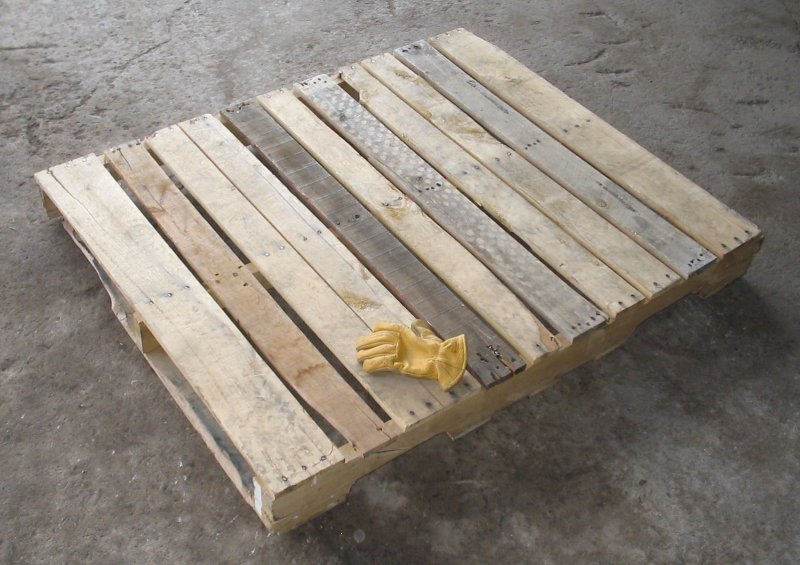
Why I Cringe Every Time I See a DIY Project Using an Old Wooden Pallet

I spend a lot of time on Pinterest looking for DIY projects, and one thing you see a lot of on the Pinterest "DIY & Crafts" section is projects that "upcycle" old wooden pallets.

This (usually) horrifies me, because these projects often seemed destined for interior spaces and never seem to mention the dangers of using pallets.

Monday, June 24, 2013

"The Plantagenets"

My Good Reads blog tells me that this book has put me two books behind schedule. I'm not really surprised, because it takes me quite a bit longer to read most non-fiction, and this one was 500 pages.
I don't think it will be a problem to catch up on my reading at Pennsic and make up the difference.

Book Number 10:

"The Plantagenets" Dan Jones

While it took me a while to get through the book (at least in comparison to my reading speed with fiction of a similar length,) it felt like a concise overview of the Plantagenet dynasty.

I did find the title a bit misleading, as the inclusion of the word "Queens" led me to believe the author might have given some weight and importance to the few female figures in the period, but even such interesting and wonderful figures as Eleanor of Aquitaine weren't given much consideration. I understand that, in the scheme of things, the political realms that this book focused on were a man's world, but, again, the title indicated that this book might have a bit of a different perspective. Alas, I read 500 pages devoted to the male figures.

Still, it's a period of history I knew little about before reading this book, and Jones managed to keep the various plots and allegiances and exchanges of power compelling and accessible. I believe all historical figures were treated justly, as Jones was able to construct or relate reasonable theories for even the most atrocious and seemingly insane actions of typically vilified kings and also tempered his sections on the typically revered kings with the areas in which they fell short.

I would not recommend this book to people who are unaccustomed to reading non-fiction, because even though Jones fleshes out most of the main players, he moves quite quickly through time and keeping track of all the exchanges of titles and land can be exhausting. If, on the other hand, you have an interest in history and don't already have a good knowledge of the politics of the period and the early history of England, I think this would be an excellent place to start. Of particular note is the section at the end of the book where Jones has recommended reading to flesh out each era and some of the people he discusses in his book. I'll be adding several of these titles to my list of books to read.

Friday, May 24, 2013

Eighth book of 2013

Skipping ahead a bit (and I'll probably skip back to talk about "Chew",) we come to the eighth book I read this year.

"Mistborn" by Brandon Sanderson

The Final Kingdom is a dark and depressed land. Ash falls from the sky and flowers and green plants are rare or extinct. Society is heavily stratified, and most people are slaves, dejected and without hope. But then a prisoner escapes and becomes a daring criminal. He assembles a crew and comes up with an impossible plan.

First of all, I really enjoy Sanderson's world building in general. I read "The Way of Kings" a couple of years ago, and in both that book and this one, he manages to create entirely new and different worlds with their own rules, creatures, and mythology. And while each has a different feel, none of them are inaccessible or so convoluted as to distract the reader (assuming the reader has read fantasy books before.) Sanderson's use of imagery is strong, and while I would say that his world is quite unusual for a fantasy world, he made it easy for me to picture.

In "Mistborn," Sanderson does some really interesting things with the way magic works. I don't want to give anything away, but it has it's own logic that is fairly easy to follow, and this logic is integral to the plot. Moreover, while he does have include the occasional exposition about the rules of magic, he manages to present it in an interesting way that keeps it light.

I also appreciate his tendency to mix up the traditional "good versus evil" trope with a good bit of gray area. While there is certainly a hero (or two) and a villain (or two,) even these characters are tempered with ambiguity and given a full and complex personality. I know this is almost standard in fantasy novels these days, but it still feels worth pointing out, since I still read plenty of fiction where good is good and evil is evil and blech.

I should also point out that this is the first book in a series, and the fifth book is due out next year. While I purchased and planned to read the second book in this series before I even started this one, I think you could read "Mistborn" as a stand-alone novel and be completely satisfied. Yes, a lot is left unresolved at the end, but that's how I like my stories.

Thursday, May 23, 2013

"Silver: Return to Treasure Island"

As promised, here's a review for one of the books I read earlier this year.

I think this is the one the most people wanted to hear about, so I decided to start with it.


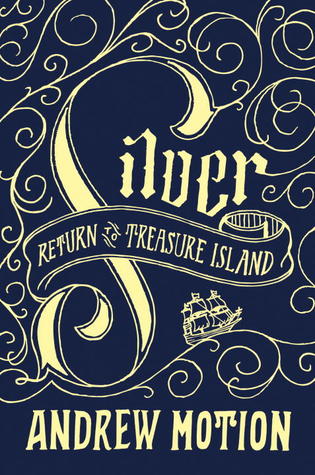
"Silver: Return to Treasure Island" by Andrew Motion


Motion does a decent job of recreating the feel of "Treasure Island," but he in trying to incorporate the societal changes that occurred in the real world between the time when the two books are set, he loses some of the sense of adventure and the unknown that the original book invoked. In this book, there are fewer colorful characters to be found on the ship's crew, and the first-person narrative style, while well-done, removes some sense of suspense and mystery.

While it seems realistic for the narrator (the son of the original story's Jim Hawkins) to say, at points, "So-and-so told me this later," or, "Don't worry. So-and-so survived," or "So-and-so later suffered a terrible fate," doing so removes a lot of suspense for the reader. I often found myself rushing through bits of text just to get past what he already said would happen.

Still, I did enjoy the book and the journey back to Treasure Island. There was some swashbuckling and danger, and there were exotic animals and, yes, a few pirates to contend with.

Catching Up

Well, I have fallen way behind on this thing, both in terms of writing reviews for all those books I've read and in terms of keeping it updated with other exciting projects that I'm working on.

I'll add more book reviews later today. I'm up to 10 books for this year so far, but I probably won't write a review for each of them.

After "Kraken," I read:

"Silver: Return to Treasure Island" by Andrew Motion
"Chew: Volume 1" by John Layman
"Death Masks" by Jim Butcher (the fifth book in the Dresden Files series)
"Mistborn" by Brandon Sanderson
"State of Wonder" by Ann Patchett
"The Book of Lost Things" by John Connolly.

Phew. That's a lot to catch up on. If there are any there that you particularly want a review of, let me know, and I'll prioritize it.

The book I've just started is non-fiction, and I haven't read a non-fiction book so far this year. This has been a conscious choice; I really like reading history books and science books, but they take me a lot longer than fiction to get through, so I know that reading them will make it harder to reach my reading goal. Oh, well. This one sounded too good to pass up, but it's a long one, too. It's "The Plantagenets" by Dan Jones. It's (shockingly) about the Plantagenet dynasty in Europe.

Other things I've been doing:

I'm engaged! So, wedding planning is going on. We're going to be having a pretty small ceremony and reception at Phipps Conservatory. I'm very excited, but I'm trying to limit my discussion of it on Facebook and the internet since I won't be able to invite many people. I am doing a few crafty things for it, though, so I'll probably post a little bit more about it on here.

Getting ready for Pennsic! Since Eric can go this year, I'm making a few bits of garb for him as well as making a few more bits for myself. This is the first time that I'm trusting patterns/tutorials that other people have posted online, so it'll be interesting to see how that goes. I'm a little worried about it, because I HATE wasting fabric, and if something doesn't turn out and the fabric's already been cut, I'm going to have to find another project to make with the fabric pieces. There may be a quilted should bag or something.

Friday, March 1, 2013

Wait, What About Book Number Three?

Book Number Three was "World War Z," and while it was interesting and fun, I didn't think I had much else to say about it that hasn't already been said approximately 100,000 times, so I didn't write a review.

Book Number Four!

I finally finished my fourth book of the year!
It was a dense one: "Kraken" by China Mieville.

I've read several of his books before, and only disliked one ("The City and the City",) so this was a safe bet and I knew what I was getting into. Mieville's writing is quite dense, filled with British slang (both real and invented,) and almost in a stream-of-consciousness style. This means that while 500 pages would normally take me 8 hours or less to read, Mieville's pages can take more than twice as long. He puts in such wonderful detail and creates such vivid worlds that it's worth the extra time.


In "Kraken," Mieville has, again, created a new yet familiar world with rules different from our own. There's a secret world within London filled with knackers, familiars, and gods, and all know -- feel that something ig is about to go down. It's the end of the world, and no one knows where it's coming from or how to stop it. Since Mieville doesn't reuse worlds from book to book, it's not clear until the last couple of pages whether or not the apocalypse really will arrive or not.

The philosophies and creatures and physics that create the world of "Kraken," are disturbing and delightful and will haunt my thoughts for a long time to come.

If you've never read a Mieville book, I wouldn't start with this one. I might choose "King Rat" or "Perdido Street Station" to begin with, but that doesn't mean that this one isn't a jewel.

Sunday, January 13, 2013

"The House at Tyneford"

Well, I've finished my second book of 2013.

It was "The House at Tyneford" by Natasha Solomons and it is the story of a young Jewish woman from Vienna named Elise. The book begins in 1938, and Elise's well-to-do parents have arranged for her to seek refuge as a parlor maid in England. Like most people, I've been exposed to many stories of World War II through books, films, and television, but this one came from a perspective that I haven't seen before. It seems strange, given how many there were, but I've never heard the story of a Jewish exile before, and having a character who was about the same age as me made it easy to relate to her, even if her life shared few similarities to my own.
Without giving too much away, the ending was messy enough for me to find it somewhat realistic, but tidy enough to leave me satisfied. Overall, I enjoyed the book for its description of the English coast, the preparations for war, and life of the moneyed classes both in Vienna and in England. Most of what I've read about the book describes it as a romance, and while romance occupies many of its pages, I don't think people looking to read a "romance" would be entirely satisfied. It is romantic, but the romance story does not seem to be the main concern of the author, and I appreciated that.

Wednesday, January 2, 2013

Up next on my reading list is "The House at Tyneford." It's been represented as a "Downtown Abbey"-esque period-piece. It's a romance, but not in the harlequin sense.

The reviews on Amazon have been mostly positive (with a few complaints about the novel being predictable,) but I haven't talked to anyone who has read it. I don't normally read romantic novels, but this one caught my eye. It's set during World War II, and the heroine is the daughter of an opera singer and a novelist, but her family is also Jewish and living in Vienna in 1938. She's sent to England to become a parlor maid.


Tuesday, January 1, 2013

One book down, 25 to go!

My goal for 2013 is to read 26 books by the end of the year. Rereading books counts, but I think I'm more likely to choose titles I haven't read before, simply for the variety. Of course, I'm already planning on rereading "The Hobbit" since I haven't read it in about ten years and I'd like to compare it to the movie
(which I still haven't seen.)

I just finished reading my first book of the year, "Sailor Twain" by Mark Siegel.

It was first published as a web comic that updated a few times a week, so that may explain the problem with the resolution that I'll describe later (though I won't give anything away about the plot.)


Sunday, September 9, 2012

Pennsic Wrap-Up

Since it's been about a month since I got back from Pennsic, it seems like it was about time I upload my pictures. Of course, I took far too few pictures while I was there, and none of me or my friends. In some ways, I think that's a good sign: I was having to much fun doing very little to be bothered to pick up my camera.

I think the most interesting thing I did at Pennsic was learning how to make glass beads. I only made one, but it turned out pretty well, and now I want to get the supplies to make them at home. Or, more accurately, at my parent's home, since I need a well ventilated area (like, say, outside) to make them in, and my apartment balcony isn't large enough. Amazon sells a pretty good beginner's kit, so that might be my birthday gift to myself in a month.

The stained glass sign I made a few months ago worked pretty well, but I need to find another way to light it: the candles worked okay, but had to be replaced every night. I think I can find some LED alternatives.

This was the best picture I got of it. I put a cup hook in one of the trees and had a chain strung along the top of the frame.

You can't tell from the pictures, but the sign was a bit small. I might try and make a larger version in an easel style. A few other camps had easel style signs that seemed to work pretty well, I'm just not sure what the best way to secure it to the ground and light it would be.
One of my favorite things at Pennsic is all the music, and my favorite musical act at Pennsic is Wolgemut. You can see them performing here, with the kids dancing around in front of them.

Wolgemut means "to have a good time" and the name is apt. As they say, "We may not be the best band at Pennsic, but we're certainly the loudest!" I always look very forward to hearing them play, so much so that I bought two of their CDs this year.

And, of course, I've already begun planning for next year!