Skipping ahead a bit (and I'll probably skip back to talk about "Chew",) we come to the eighth book I read this year.
"Mistborn" by Brandon Sanderson
The Final Kingdom is a dark and depressed land. Ash falls from the sky and flowers and green plants are rare or extinct. Society is heavily stratified, and most people are slaves, dejected and without hope. But then a prisoner escapes and becomes a daring criminal. He assembles a crew and comes up with an impossible plan.
First of all, I really enjoy Sanderson's world building in general. I read "The Way of Kings" a couple of years ago, and in both that book and this one, he manages to create entirely new and different worlds with their own rules, creatures, and mythology. And while each has a different feel, none of them are inaccessible or so convoluted as to distract the reader (assuming the reader has read fantasy books before.) Sanderson's use of imagery is strong, and while I would say that his world is quite unusual for a fantasy world, he made it easy for me to picture.
In "Mistborn," Sanderson does some really interesting things with the way magic works. I don't want to give anything away, but it has it's own logic that is fairly easy to follow, and this logic is integral to the plot. Moreover, while he does have include the occasional exposition about the rules of magic, he manages to present it in an interesting way that keeps it light.
I also appreciate his tendency to mix up the traditional "good versus evil" trope with a good bit of gray area. While there is certainly a hero (or two) and a villain (or two,) even these characters are tempered with ambiguity and given a full and complex personality. I know this is almost standard in fantasy novels these days, but it still feels worth pointing out, since I still read plenty of fiction where good is good and evil is evil and blech.
I should also point out that this is the first book in a series, and the fifth book is due out next year. While I purchased and planned to read the second book in this series before I even started this one, I think you could read "Mistborn" as a stand-alone novel and be completely satisfied. Yes, a lot is left unresolved at the end, but that's how I like my stories.
Friday, May 24, 2013
Thursday, May 23, 2013
"Silver: Return to Treasure Island"
As promised, here's a review for one of the books I read earlier this year.
I think this is the one the most people wanted to hear about, so I decided to start with it.
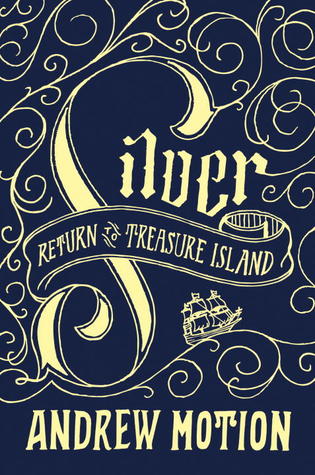
"Silver: Return to Treasure Island" by Andrew Motion
Motion does a decent job of recreating the feel of "Treasure Island," but he in trying to incorporate the societal changes that occurred in the real world between the time when the two books are set, he loses some of the sense of adventure and the unknown that the original book invoked. In this book, there are fewer colorful characters to be found on the ship's crew, and the first-person narrative style, while well-done, removes some sense of suspense and mystery.
While it seems realistic for the narrator (the son of the original story's Jim Hawkins) to say, at points, "So-and-so told me this later," or, "Don't worry. So-and-so survived," or "So-and-so later suffered a terrible fate," doing so removes a lot of suspense for the reader. I often found myself rushing through bits of text just to get past what he already said would happen.
Still, I did enjoy the book and the journey back to Treasure Island. There was some swashbuckling and danger, and there were exotic animals and, yes, a few pirates to contend with.
I think this is the one the most people wanted to hear about, so I decided to start with it.
"Silver: Return to Treasure Island" by Andrew Motion
Motion does a decent job of recreating the feel of "Treasure Island," but he in trying to incorporate the societal changes that occurred in the real world between the time when the two books are set, he loses some of the sense of adventure and the unknown that the original book invoked. In this book, there are fewer colorful characters to be found on the ship's crew, and the first-person narrative style, while well-done, removes some sense of suspense and mystery.
While it seems realistic for the narrator (the son of the original story's Jim Hawkins) to say, at points, "So-and-so told me this later," or, "Don't worry. So-and-so survived," or "So-and-so later suffered a terrible fate," doing so removes a lot of suspense for the reader. I often found myself rushing through bits of text just to get past what he already said would happen.
Still, I did enjoy the book and the journey back to Treasure Island. There was some swashbuckling and danger, and there were exotic animals and, yes, a few pirates to contend with.
Catching Up
Well, I have fallen way behind on this thing, both in terms of writing reviews for all those books I've read and in terms of keeping it updated with other exciting projects that I'm working on.
I'll add more book reviews later today. I'm up to 10 books for this year so far, but I probably won't write a review for each of them.
After "Kraken," I read:
"Silver: Return to Treasure Island" by Andrew Motion
"Chew: Volume 1" by John Layman
"Death Masks" by Jim Butcher (the fifth book in the Dresden Files series)
"Mistborn" by Brandon Sanderson
"State of Wonder" by Ann Patchett
"The Book of Lost Things" by John Connolly.
Phew. That's a lot to catch up on. If there are any there that you particularly want a review of, let me know, and I'll prioritize it.
The book I've just started is non-fiction, and I haven't read a non-fiction book so far this year. This has been a conscious choice; I really like reading history books and science books, but they take me a lot longer than fiction to get through, so I know that reading them will make it harder to reach my reading goal. Oh, well. This one sounded too good to pass up, but it's a long one, too. It's "The Plantagenets" by Dan Jones. It's (shockingly) about the Plantagenet dynasty in Europe.
Other things I've been doing:
I'm engaged! So, wedding planning is going on. We're going to be having a pretty small ceremony and reception at Phipps Conservatory. I'm very excited, but I'm trying to limit my discussion of it on Facebook and the internet since I won't be able to invite many people. I am doing a few crafty things for it, though, so I'll probably post a little bit more about it on here.
Getting ready for Pennsic! Since Eric can go this year, I'm making a few bits of garb for him as well as making a few more bits for myself. This is the first time that I'm trusting patterns/tutorials that other people have posted online, so it'll be interesting to see how that goes. I'm a little worried about it, because I HATE wasting fabric, and if something doesn't turn out and the fabric's already been cut, I'm going to have to find another project to make with the fabric pieces. There may be a quilted should bag or something.
I'll add more book reviews later today. I'm up to 10 books for this year so far, but I probably won't write a review for each of them.
After "Kraken," I read:
"Silver: Return to Treasure Island" by Andrew Motion
"Chew: Volume 1" by John Layman
"Death Masks" by Jim Butcher (the fifth book in the Dresden Files series)
"Mistborn" by Brandon Sanderson
"State of Wonder" by Ann Patchett
"The Book of Lost Things" by John Connolly.
Phew. That's a lot to catch up on. If there are any there that you particularly want a review of, let me know, and I'll prioritize it.
The book I've just started is non-fiction, and I haven't read a non-fiction book so far this year. This has been a conscious choice; I really like reading history books and science books, but they take me a lot longer than fiction to get through, so I know that reading them will make it harder to reach my reading goal. Oh, well. This one sounded too good to pass up, but it's a long one, too. It's "The Plantagenets" by Dan Jones. It's (shockingly) about the Plantagenet dynasty in Europe.
Other things I've been doing:
I'm engaged! So, wedding planning is going on. We're going to be having a pretty small ceremony and reception at Phipps Conservatory. I'm very excited, but I'm trying to limit my discussion of it on Facebook and the internet since I won't be able to invite many people. I am doing a few crafty things for it, though, so I'll probably post a little bit more about it on here.
Getting ready for Pennsic! Since Eric can go this year, I'm making a few bits of garb for him as well as making a few more bits for myself. This is the first time that I'm trusting patterns/tutorials that other people have posted online, so it'll be interesting to see how that goes. I'm a little worried about it, because I HATE wasting fabric, and if something doesn't turn out and the fabric's already been cut, I'm going to have to find another project to make with the fabric pieces. There may be a quilted should bag or something.
Friday, March 1, 2013
Wait, What About Book Number Three?
Book Number Three was "World War Z," and while it was interesting and fun, I didn't think I had much else to say about it that hasn't already been said approximately 100,000 times, so I didn't write a review.
Book Number Four!
I finally finished my fourth book of the year!
It was a dense one: "Kraken" by China Mieville.
I've read several of his books before, and only disliked one ("The City and the City",) so this was a safe bet and I knew what I was getting into. Mieville's writing is quite dense, filled with British slang (both real and invented,) and almost in a stream-of-consciousness style. This means that while 500 pages would normally take me 8 hours or less to read, Mieville's pages can take more than twice as long. He puts in such wonderful detail and creates such vivid worlds that it's worth the extra time.
In "Kraken," Mieville has, again, created a new yet familiar world with rules different from our own. There's a secret world within London filled with knackers, familiars, and gods, and all know -- feel that something ig is about to go down. It's the end of the world, and no one knows where it's coming from or how to stop it. Since Mieville doesn't reuse worlds from book to book, it's not clear until the last couple of pages whether or not the apocalypse really will arrive or not.
The philosophies and creatures and physics that create the world of "Kraken," are disturbing and delightful and will haunt my thoughts for a long time to come.
If you've never read a Mieville book, I wouldn't start with this one. I might choose "King Rat" or "Perdido Street Station" to begin with, but that doesn't mean that this one isn't a jewel.
It was a dense one: "Kraken" by China Mieville.
I've read several of his books before, and only disliked one ("The City and the City",) so this was a safe bet and I knew what I was getting into. Mieville's writing is quite dense, filled with British slang (both real and invented,) and almost in a stream-of-consciousness style. This means that while 500 pages would normally take me 8 hours or less to read, Mieville's pages can take more than twice as long. He puts in such wonderful detail and creates such vivid worlds that it's worth the extra time.
In "Kraken," Mieville has, again, created a new yet familiar world with rules different from our own. There's a secret world within London filled with knackers, familiars, and gods, and all know -- feel that something ig is about to go down. It's the end of the world, and no one knows where it's coming from or how to stop it. Since Mieville doesn't reuse worlds from book to book, it's not clear until the last couple of pages whether or not the apocalypse really will arrive or not.
The philosophies and creatures and physics that create the world of "Kraken," are disturbing and delightful and will haunt my thoughts for a long time to come.
If you've never read a Mieville book, I wouldn't start with this one. I might choose "King Rat" or "Perdido Street Station" to begin with, but that doesn't mean that this one isn't a jewel.
Sunday, January 13, 2013
"The House at Tyneford"
Well, I've finished my second book of 2013.
It was "The House at Tyneford" by Natasha Solomons and it is the story of a young Jewish woman from Vienna named Elise. The book begins in 1938, and Elise's well-to-do parents have arranged for her to seek refuge as a parlor maid in England. Like most people, I've been exposed to many stories of World War II through books, films, and television, but this one came from a perspective that I haven't seen before. It seems strange, given how many there were, but I've never heard the story of a Jewish exile before, and having a character who was about the same age as me made it easy to relate to her, even if her life shared few similarities to my own.
Without giving too much away, the ending was messy enough for me to find it somewhat realistic, but tidy enough to leave me satisfied. Overall, I enjoyed the book for its description of the English coast, the preparations for war, and life of the moneyed classes both in Vienna and in England. Most of what I've read about the book describes it as a romance, and while romance occupies many of its pages, I don't think people looking to read a "romance" would be entirely satisfied. It is romantic, but the romance story does not seem to be the main concern of the author, and I appreciated that.
It was "The House at Tyneford" by Natasha Solomons and it is the story of a young Jewish woman from Vienna named Elise. The book begins in 1938, and Elise's well-to-do parents have arranged for her to seek refuge as a parlor maid in England. Like most people, I've been exposed to many stories of World War II through books, films, and television, but this one came from a perspective that I haven't seen before. It seems strange, given how many there were, but I've never heard the story of a Jewish exile before, and having a character who was about the same age as me made it easy to relate to her, even if her life shared few similarities to my own.
Without giving too much away, the ending was messy enough for me to find it somewhat realistic, but tidy enough to leave me satisfied. Overall, I enjoyed the book for its description of the English coast, the preparations for war, and life of the moneyed classes both in Vienna and in England. Most of what I've read about the book describes it as a romance, and while romance occupies many of its pages, I don't think people looking to read a "romance" would be entirely satisfied. It is romantic, but the romance story does not seem to be the main concern of the author, and I appreciated that.
Wednesday, January 2, 2013
Up next on my reading list is "The House at Tyneford." It's been represented as a "Downtown Abbey"-esque period-piece. It's a romance, but not in the harlequin sense.
The reviews on Amazon have been mostly positive (with a few complaints about the novel being predictable,) but I haven't talked to anyone who has read it. I don't normally read romantic novels, but this one caught my eye. It's set during World War II, and the heroine is the daughter of an opera singer and a novelist, but her family is also Jewish and living in Vienna in 1938. She's sent to England to become a parlor maid.
Subscribe to:
Posts (Atom)